

Gold jewelry is chosen by many people thanks to its luxurious and classy beauty. However, on the market today there are also many shops selling fake gold of poor quality at high prices, causing confusion for buyers. Please refer to 13 ways to identify real gold and distinguish fake gold quickly and accurately below!
|
Quickly view content 13 Ways to identify real gold and distinguish fake gold quickly and accurately 1. Identify by observing under light 2. Identify by symbols on gold jewelry 3. Recognize by biting hard on the gold 4. Identify by observing the tarnish of gold 5. Identify by makeup foundation 8. Identification by unglazed ceramic 9. Identify by checking the weight of gold 11. Identification by nitric acid solution |
Depending on your preferences and purpose of use, you can choose the type of gold that suits your needs. Each type of gold will have different characteristics, quality and price.
Popular types of gold on the market today include:
- Ta gold/9999 gold.
- 999 Gold/24K Gold.
- White gold/White gold 10K, 14K, 18K.
- Rose gold/Rose gold 10K, 14K, 18K.
- Western Gold/Gold 8K, 9K, 10K, 14K, 18K.
- Italian Gold/Italian Gold 750, 925.
- Young gold.
- Fine gold.
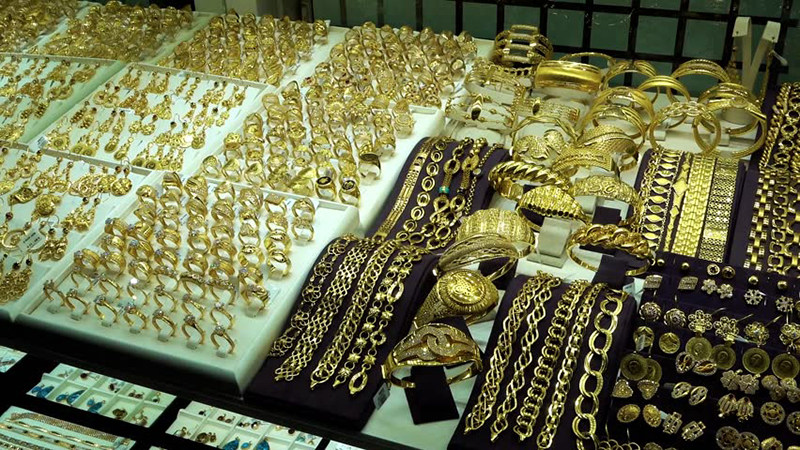
Types of gold on the market today
Currently, the situation of fake gold and poor quality gold is increasing, causing confusion for buyers. Therefore, to avoid buying fake gold and losing money unjustly, you should know how to distinguish real gold from fake gold accurately and quickly.
2. Summary of 13 ways to identify real gold and distinguish fake gold
2.1 Identify by observing under light
The fastest and simplest way to distinguish real gold from fake gold is to observe them under light.
If it is real gold , you will see a smooth surface, no tiny dots, no protrusions.
On the contrary, if it is fake gold, small white or red spots will appear on the surface .
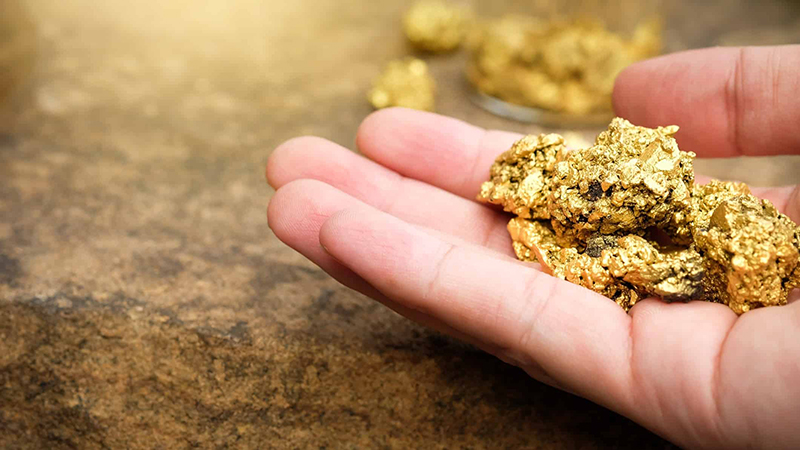
Real gold will have a smooth surface when viewed under light
2.2 Identify by symbols on gold jewelry
For real gold jewelry , on the surface of the product are always engraved symbols indicating the age and brand of gold such as 10K, 24K, 18K, PNJ, SCJ, 9999,...
Meanwhile, if it is fake gold , you will not find these symbols.

Real gold will have symbols on the surface
2.3 Identify by biting hard on the gold
Real gold will be soft and easily show tooth marks when bitten hard. Fake gold will be hard and will not be scratched or dented.
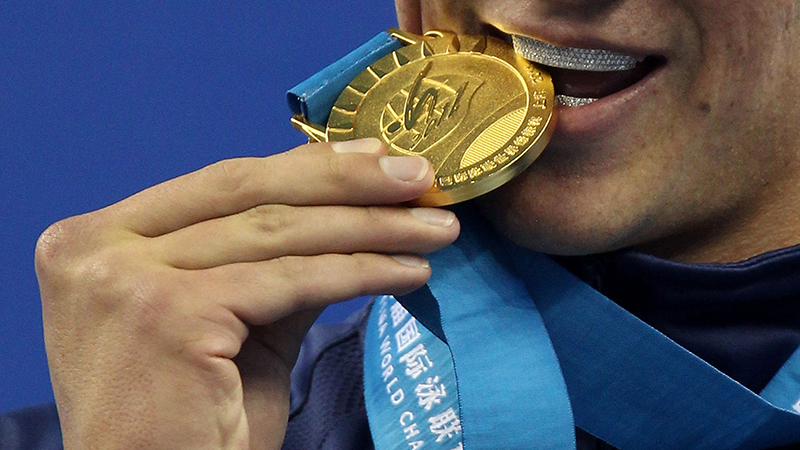
Bite hard to check whether the gold is real or fake
2.4 Identify by observing the tarnish of gold
If it is fake gold , after a period of use, the plating layer above will disappear, revealing other colored metal materials under the gold layer. 100% real gold will not have this phenomenon.
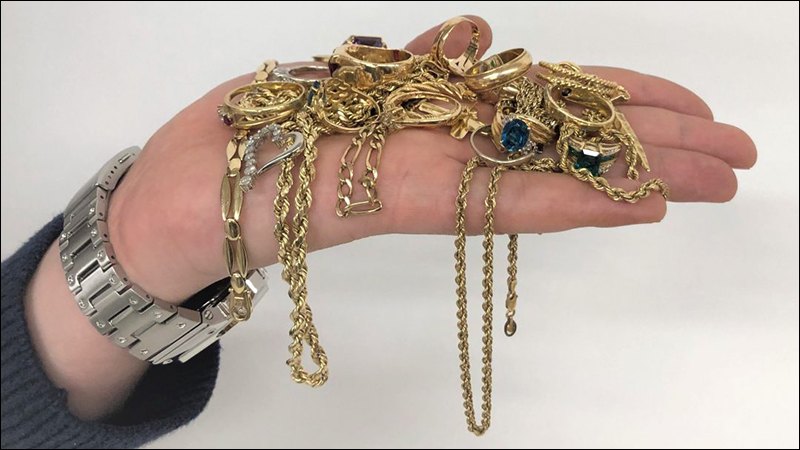
Fake gold will tarnish after a period of use
2.5 Identify by makeup foundation
Apply a layer of liquid foundation on the back of your hand and wait for it to dry, then rub your hand on the golden surface.
If you see a streak left on the newly applied cream, it's real gold ; if you don't see anything, it's fake gold.
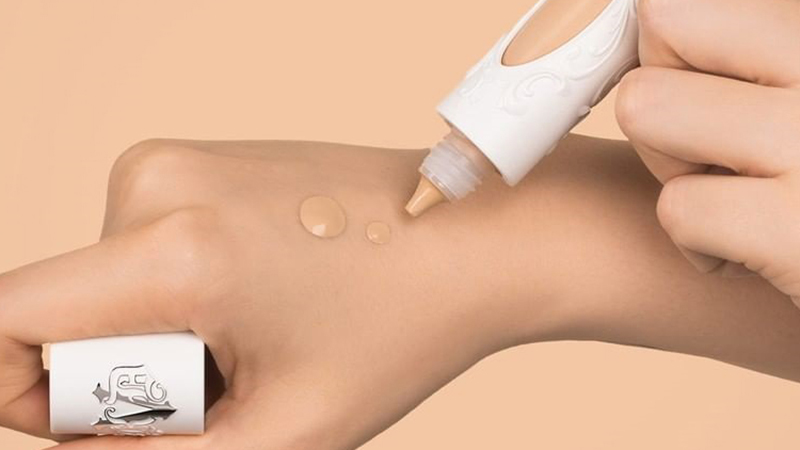
Use foundation to identify real gold and fake gold
2.6 Identification with vinegar
Note: This method can only be applied to 99.99% gold jewelry . Designs with stones, gold or pearls will not be recognizable.
Prepare a cup of vinegar, then soak the jewelry for about 15 - 30 minutes and observe the color of the water in the cup.
If the vinegar turns black, green or smoky brown , it is fake gold ; if there is no change in color, it is real gold.

Real gold will not cause the vinegar to change color when soaked
2.7 Identification by magnet
Use a magnet to bring it close to the gold to check. If attraction occurs , it is fake gold , but real gold will not react to the magnet .

Real gold will not react to magnets
2.8 Identification by unglazed ceramic
Note: This method will not be able to distinguish fake gold that has an outer layer of real gold, or fake gold in terms of age and weight.
Take the gold and rub it vigorously on the surface of the glazed ceramic (which is now white). If yellow streaks appear , it is real gold , and black streaks are fake gold .
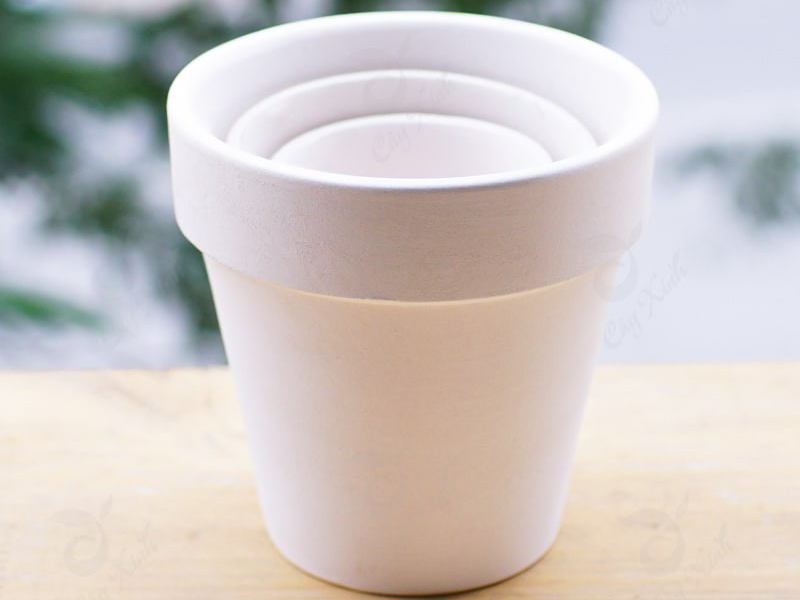
Use unglazed ceramic to identify real gold
2.9 Identify by checking gold weight
First, you need to weigh the weight of the gold you want to test.
Next, prepare a bottle of water graduated in milliliters (ml), fill it halfway with water and let the gold soak.
Note the water level before and after adding gold to calculate the additional water volume.
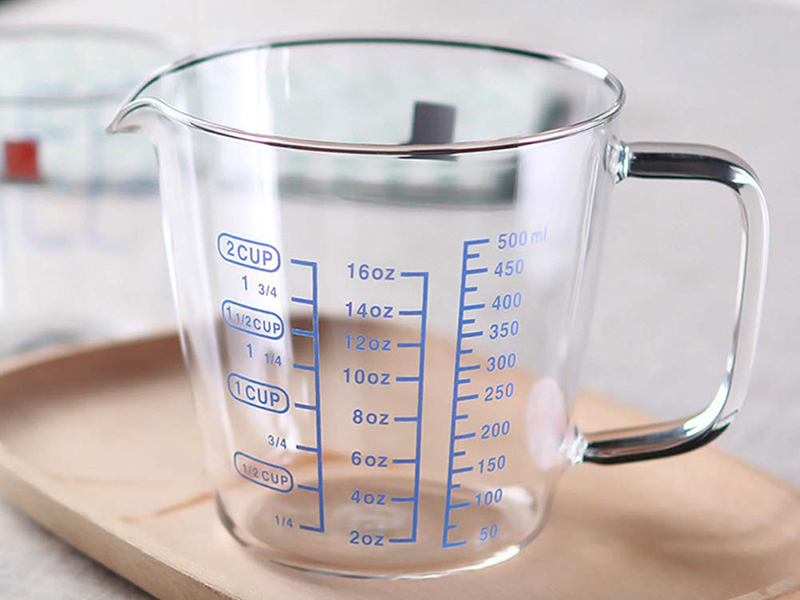
Soak the gold in a measuring cup of water
Finally, apply the density calculation formula below:
Density = added weight/volume
If the added density is nearly 19g/ml , it is real gold.
For example, gold has a weight of 38 g, the measured increase in volume is 2 ml, the density will be 38/2 = 19 g/ml. So that jewelry is real gold.
2.10 Identification by aqua regia
Note: This method may cause the jewelry to wear out due to oxidation .
Aqua regia is a very corrosive compound and reacts with real gold. Use a towel or cotton ball to soak it in aqua regia, then dab it on the gold and observe the reaction on the surface.
Real gold will corrode when exposed to solution, but fake gold will not have any problems.
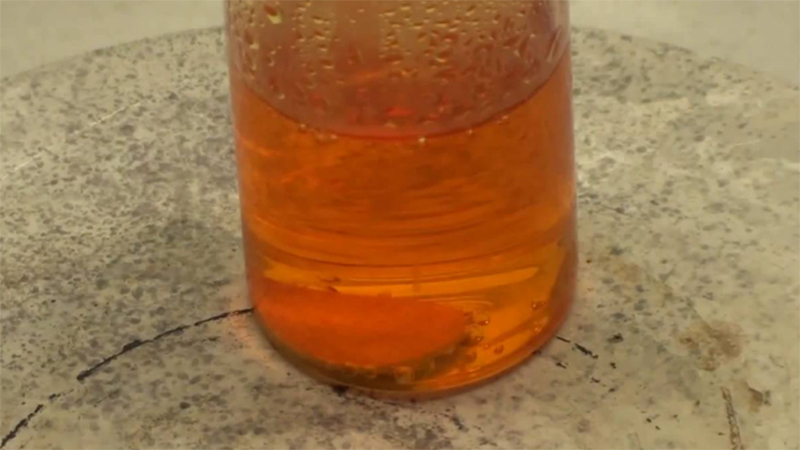
Real gold will be corroded by aqua regia
2.11 Identification by nitric acid solution
Soak the jewelry in nitric acid solution (HNO3) or use a towel or cotton ball to blot the gold surface. If there is no phenomenon, it is real gold, but fake gold will create water and salt when meeting this acid solution.
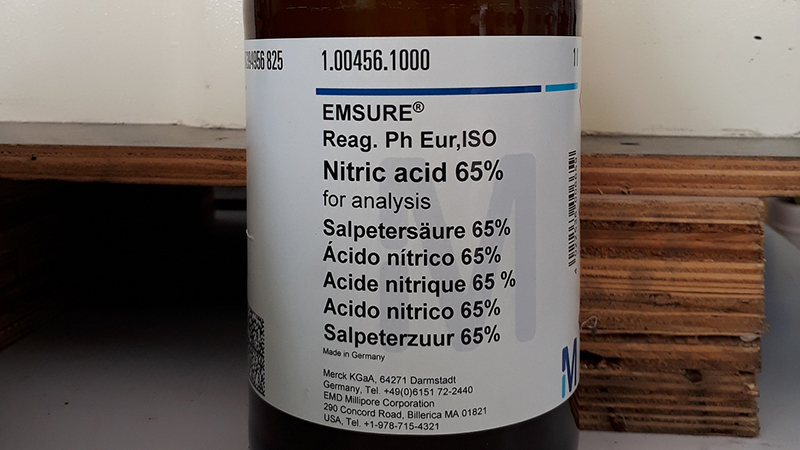
Real gold will not react with nitric acid
2.12 Identification by torch fire
Note:
- This method is only effective on 99.99% gold.
- Can cause loss of aesthetics for your jewelry.
Cut a small piece of gold or make a cut on the surface of the gold, then use a flame to thoroughly burn the cut position.
If the gold melts and leaves a layer on the outside of the cut, it is fake gold . Real gold also melts when exposed to high heat but will not leave anything behind.
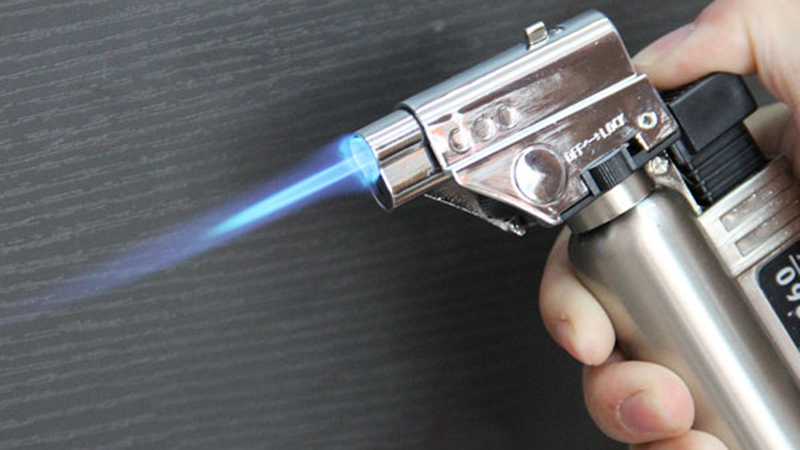
Use a torch to identify real gold
2.13 Identification using an electronic gold tester
If you regularly shop and store gold, don't hesitate to invest in an electronic gold tester to ensure higher accuracy. You can read the instructions for use when buying the device or ask the seller for advice on how to read the results!
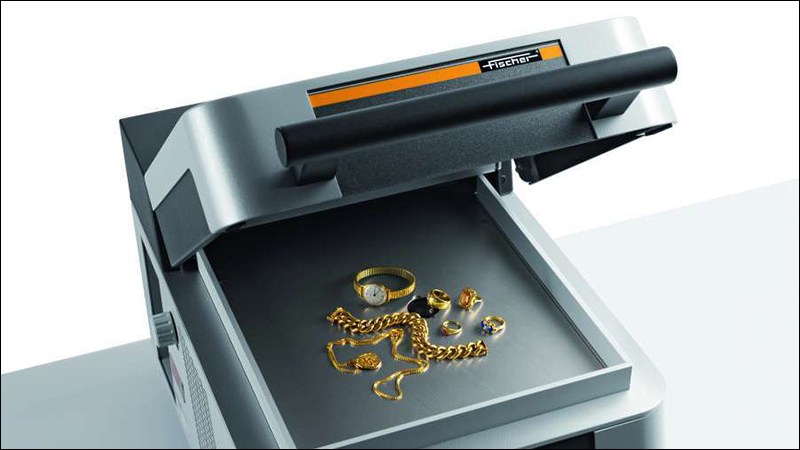
Gold tester gives highly accurate results
Summary
|
How to recognize |
Real gold |
Fake gold |
|---|---|---|
|
Observe under light |
The surface is smooth, without tiny dots or dents |
The surface has small red or white spots |
|
Observe the markings on the surface |
There are symbols such as 10K, 24K, 18K, 9999,... |
There are no symbols |
|
Bite hard into the gold |
Soft, dented, with tooth marks |
Hard, no dents |
|
Observe the dullness |
Does not tarnish |
The plating layer has washed away, revealing different colored metal |
|
Rub with makeup foundation |
Leaves streaks when rubbed |
Doesn't leave any streaks |
|
Soak in vinegar |
Does not change vinegar color |
The vinegar turns black, green or smoky brown |
|
Let it come into contact with the magnet |
No response |
There is suction |
|
Rubbing with unglazed ceramic |
Leaves yellow streaks on ceramic |
Leaves black streaks on ceramic |
|
Check the gold weight |
Density is close to 19g/ml |
The density is much different with 19g/ml |
|
React with aqua regia |
Corroded |
No corrosion |
|
Use nitric acid |
There is no phenomenon |
Creates salt and water |
|
Use a torch |
Does not leave traces on the surface after flowing |
Leaves a sticky layer on the surface after flowing |
|
Use an electronic gold tester |
Real gold detector |
Fake gold detector |
You can refer to quality gold age measuring machines at South America Laser !!
-------------------------------------------------- -----------
THANK YOU FOR YOUR INTEREST
Bài viết liên quan

MÁY CẮT VẢI LASER CÓ NHỮNG ƯU ĐIỂM GÌ NỔI BẬT?

ĐẶC TRƯNG CƠ BẢN CỦA MÁY CNC

CÁC BỘ PHẬN CHÍNH CỦA MÁY CNC


